Facebook
Twitter
Home
About
Event Calendar
Add an Event
Event List
Videos
Back Issues
News Bulletin
Advertising
Contact DRA
Search
Facebook
Twitter
31.6
C
Singapore
Tuesday, June 9, 2026
Home
About
Event Calendar
Add an Event
Event List
Videos
Back Issues
News Bulletin
Advertising
Contact DRA
Sign in
Welcome! Log into your account
your username
your password
Forgot your password? Get help
Password recovery
Recover your password
your email
A password will be e-mailed to you.
Defence Review Asia
Home
About
Event Calendar
Add an Event
Event List
Videos
Back Issues
News Bulletin
Advertising
Contact DRA
Trending Now
ST Engineering Secures MINDEF Contract for Next-Generation Terrex s5 Infantry Fighting Vehicles
DSTA Partners with Epirus to Advance Counter-UAS Capabilities
Babcock International CEO David Lockwood to Retire, Harry Holt Appointed Successor
Hanwha Expands Canadian Industry Partnerships for CPSP
Babcock Signs Arrowhead 140 Agreement Under Indonesia MPP
Italian Army Launches A2CS Programme with First Lynx IFV Deliveries
Japan orders additional Joint Strike Missiles from KONGSBERG
Hanwha Aerospace Signs US$4 Billion Contract to Produce Chunmoo Missiles in Poland
Bundeswehr Extends Rheinmetall Contract for Puma IFV 30mm Ammunition
BAE Systems Secures $1.7bn U.S. Navy Contract for APKWS Laser-Guidance Kits
News Bulletin
Advertise Now
Land
ST Engineering Secures MINDEF Contract for Next-Generation Terrex s5 Infantry Fighting Vehicles
January 28, 2026
Air & Space
DSTA Partners with Epirus to Advance Counter-UAS Capabilities
General News
Babcock International CEO David Lockwood to Retire, Harry Holt Appointed Successor
Industry News
Hanwha Expands Canadian Industry Partnerships for CPSP
Sea
Babcock Signs Arrowhead 140 Agreement Under Indonesia MPP
LAND
ST Engineering Secures MINDEF Contract for Next-Generation Terrex s5 Infantry Fighting...
Italian Army Launches A2CS Programme with First Lynx IFV Deliveries
Hanwha Aerospace Signs US$4 Billion Contract to Produce Chunmoo Missiles in...
Bundeswehr Extends Rheinmetall Contract for Puma IFV 30mm Ammunition
Saab Receives SEK 314 Million Order for UTAAS Sight and Fire...
HENSOLDT Unveils TAERVUS:
AIR & SPACE
DSTA Partners with Epirus to Advance Counter-UAS Capabilities
Rotron Aerospace and LIG Nex1 Sign Strategic MoU to Advance Next-Generation...
Belgian Defence Selects Pilatus PC-7 MKX for Basic Military Flight Training
Denmark Acquires NASAMS Air Defence System in €500 Million Contract with...
RAAF P-8A Poseidon Crews Enhance Maritime Surveillance with Malaysia Under Operation...
Embraer Delivers C-390 Millennium to Hungarian Air Force
SEA
Babcock Signs Arrowhead 140 Agreement Under Indonesia MPP
BAE Systems Secures $1.7bn U.S. Navy Contract for APKWS Laser-Guidance Kits
Second Turkish HDW Class Submarine Handover
South Korea Eyes Stronger Foothold in Poland’s Defence Market with Submarine...
Exail Begins Production of Sixth Steering Console for Korean Navy Submarine...
Sweden Selects Saab A26 Submarines for Poland’s New Naval Fleet
JOINT PROJECTS
HENSOLDT Launches MDOcore to Transform Digital Battlefield Operations
DSEI 2025 News Recap
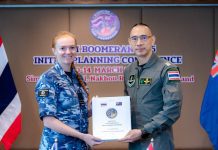
Exercise Thai Boomerang 2025 Strengthens RAAF–RTAF Ties
Exercise Alon 25 Kicks Off in the Philippines
Philippines and Australia Joint Military Training Program Strengthens Defence Ties
ASELSAN Unveils New Warfare Systems
CYBER SECURITY
HENSOLDT Launches MDOcore to Transform Digital Battlefield Operations
South Korea spent $222 billion on defense from 2021 to 2025
China’s Cyber Espionage Surges 150%
Singapore’s Cyber Security Agency award Veracity Trust Network S$1 million
Nozomi Networks OT and IoT visibility and threat detection capabilities now...
LG MAGNA ACQUIRES CYBER SECURITY MANAGEMENT SYSTEM CERTIFICATION
IT
HENSOLDT Launches MDOcore to Transform Digital Battlefield Operations
HENSOLDT Adopts SAP Cloud for Digital Sovereignty
HENSOLDT launches its new QRTK77 cryptographic computer at Paris Air Show...
Dragoon Selects Teledyne FLIR OEM Prism Software
EDGE Launches ‘Group AI Accelerator’
Teledyne FLIR OEM Launches Prism SKR
SIMULATION & TRAINING
Exercise Talisman Sabre 2023 comes to a close
Ministry of Industry and Advanced Technology and EDGE Conduct the First...
Pilots from Kazakhstan improved their skills in operating the Mi-171A2 helicopter...
Australia-Japan Reciprocal Access Agreement improves security for both
3D perception Delivers 3 Atlas Visual Display Systems to Saab Gripen E...
InVeris Training Solutions Unveils SRCE™ – a Revolutionary, Augmented Reality Training...
GENERAL NEWS
Babcock International CEO David Lockwood to Retire, Harry Holt Appointed Successor
Hanwha Expands Canadian Industry Partnerships for CPSP
Italian Army Launches A2CS Programme with First Lynx IFV Deliveries
Cohort and Hanwha Ocean Sign MoU to Pursue Thai Frigate and...
Hanwha Aerospace and BAE Systems Partner on Advanced Anti-Jamming GPS for...
Saab Secures Gripen E/F Fighter Aircraft Order for Thailand
INDUSTRY NEWS
ST Engineering Secures MINDEF Contract for Next-Generation Terrex s5 Infantry Fighting...
DSTA Partners with Epirus to Advance Counter-UAS Capabilities
Babcock International CEO David Lockwood to Retire, Harry Holt Appointed Successor
Babcock Signs Arrowhead 140 Agreement Under Indonesia MPP
Italian Army Launches A2CS Programme with First Lynx IFV Deliveries
Hanwha Aerospace Signs US$4 Billion Contract to Produce Chunmoo Missiles in...
STAY CONNECTED
4,164
Fans
Like
817
Followers
Follow
Best Defence Business, Asia pacific and Defence Technology News! Sign Up for our DRA News Bulletin
First Name*:
Last Name
Email address*:
Leave this field empty if you're human: